
Press|
Painter who commuted to Bangye-ri Ginkgo Tree for six years: "I learned how to see things as they truly are."
The Hankook Ilbo
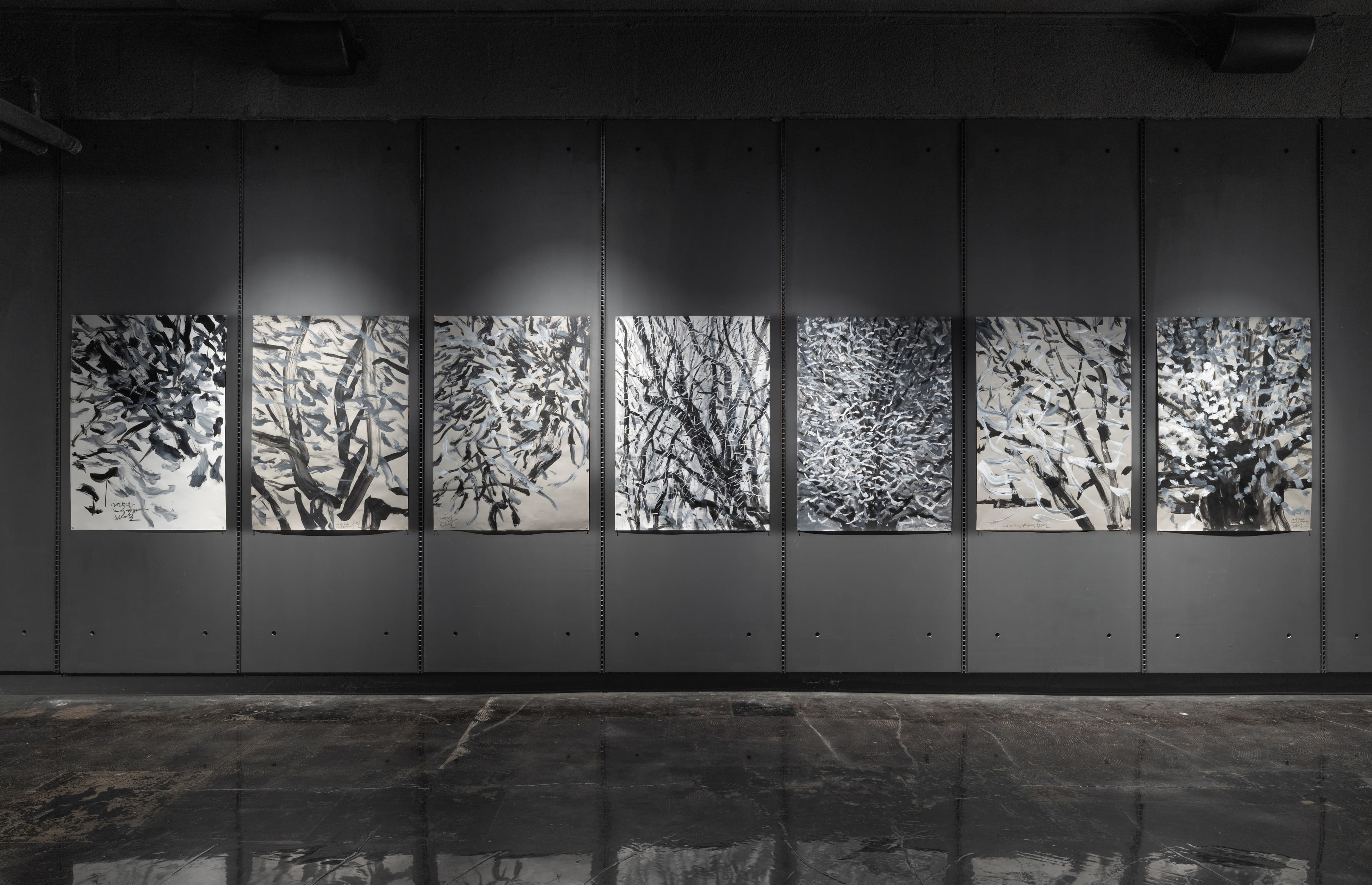
When autumn arrives, social networking services (SNS) are flooded with verification photos taken in front of this ginkgo tree. This is the Ban-gye-ri Ginkgo Tree in Munmak-eup, Wonju, Gangwon Province, a natural monument over 1,300 years old. Anyone who has recently visited the ginkgo tree might have crossed paths with this person. Western painter Choi Seon-gil (63) has spent the past six years, since November 2019, visiting and capturing this ginkgo tree on his canvas, as if it were his daily commute.
His canvas has recently been published as 'One Day, I Met a Tree.' It is a collection of picture essays featuring his Ban-gye-ri Ginkgo Tree paintings and related anecdotes. When interviewed by phone on the 24th, he said, "While painting under the tree, I went through a process of many thoughts ripening," adding, "The tree is a great teacher in life."
In November 2019, Artist Choi accidentally saw a photo of this tree on SNS. It was located about a 20-30 minute drive from his home (Buron-myeon, Wonju), where he had moved back a few years prior. Although the tree was a familiar subject he enjoyed painting, meeting it made him feel, "I cannot stop painting this tree for a long time." He dedicated himself to visiting the tree almost every day for a year. Even painting the same tree repeatedly did not become tedious. "After five hours of painting, a diverse expression was captured, including the subtle changes and vibrations of light over time."
This is the temporality of painting. It is the reason he insists on doing on-site work in front of the tree instead of painting from photographs. A year later, he visited the tree to express his gratitude after completing an exhibition with the paintings he created. "I returned after fifteen days of the exhibition, and it felt so strange. The tree's form and the energy it emitted—everything felt unfamiliar, as if I were seeing it for the first time. So, I decided to continue painting without setting a deadline."
It has already been six years. The tree becomes new with every viewing. In the winter, when foot traffic stopped, he saw himself projected onto the tree standing lonely and solitary. On another day, the tree's roots looked like the form of a person lying down. What he learned while painting one tree for a long time is that he "could see according to what he saw (impression), rather than seeing according to what he wanted (concept)."
"I taught students for over 20 years while painting. I often discussed the attitude of artists—that 'you must observe closely' and 'you must be able to see what others do not see.' That, I realized, was seeing according to what you wanted. You adjust the subject to fit your desired picture. But after painting the tree for so long, I started seeing forms that were completely unexpected, to my surprise. Letting go of my own greed and standards and seeing what is presented is the biggest change since I started painting the tree."
He has painted over 200 ginkgo tree pictures so far. The works can be seen at the solo exhibition, 'Song of a Millennium: Autumn's Narrative,' held at Art Cube 2R2 Gallery in Gangnam-gu, Seoul. When asked how long he plans to continue painting the tree, he replied, "I plan to paint until the tree naturally tells me, 'Enough.'" He plans to willingly sit in front of the ginkgo tree and paint again this winter. The exhibition runs until December 17th.